Amantes de la Irrealidad
Oí al viento prometer
a los cardos un jardín,
un edén donde cambiar
pinchos por amor.
Y si él lo dice a qué dudar,
sabe cuanto hay por saber.
En tus brazos llévame,
tú lo encontrarás.
Mas, si llego antes que tú,
no cansaré de esperar.
Tú y yo, seremos siempre así,
amantes ciegos de la irrealidad
Y no hay razón para cambiarlo,
si acaso, un poco por sobrevivir
Cabalgando entre las nubes has vivido tú,
entrelazando sueños locos siempre he estado yo
Tu y yo...
Cobarde o desertor
Traga saliva amigo,
sabías que este día iba a llegar.
mas no por esperado es menos triste,
tan sólo más absurdo.
El vuelo en este avión se me hace largo
tratando no pensar que pasará,
mi vida en dos minutos ha cambiado
y todo queda atrás, todo queda atrás.
(HABLAN LOS PAPIS)
"Deja esas ideas que ahora tienes de escapar,
todos han pasado lo que tú vas a pasar,
si no hay problemas, cada sábado vendrás
a casa."
"Volverás más serio, hecho un hombre de verdad,
todas tus locuras en un año acabarán.
Luego te colocas, puedes formar un hogar
como éste."
Yo, que nunca entendí de guerras,
que vivo sólo en mi nube sin luchar,
me encuentro con que al fin me ha llegado la hora del deber.
Pero qué deber? Si no hay deber, si nada debo a nadie más que a mí,
que sólo sé que estoy vivo
y que la vida no lo es sin libertad.
Cobarde o desertor,
el nombre que me den me será igual, qué más da!
Estaré muy solo ¿Por qué?
[PAPIS]
"Tú te lo has buscado, paga por ello eres muy pavo"
¿Qué pasará ahora? No sé.
[PAPIS]
"Si no lo hubieses hecho nada tendrías que temer.
Te está muy bien, te está muy bien, te está bien"
Notas sobre "Cobarde o desertor""
La historia de "Cobarde o desertor" está basada en los acontecimientos ocurridos en España a principios de Noviembre de 1975. Recordemos en primer lugar que en aquella época el servicio militar, la "mili", seguía siendo obligatoria. Todos los varones jóvenes estaban por tanto obligados a realizar dicho servicio.
La dictadura impuesta con mano férrea durante más de 40 años por un Franco, ahora en su lecho de muerte, se enfrenta en ese momento a una importante crisis política:
Las autoridades marroquíes, y más precisamente el rey de Marruecos,
Hasan II , él mismo tambien otro dictador, pone en marcha una campaña perfectamente orquestada conocida por el nombre de la
"Marcha Verde" con el único objetivo de invadir y ocupar "pacíficamente", pero al mismo tiempo a la fuerza, el territorio conocido como el Sahara español, bajo administración española durante más de cien años.
Como consecuencia de estos acontecimientos se cierne en aquellos momentos para muchos jóvenes la sombra de una posible campaña militar en Marruecos.
"Oímos" en primer lugar al principio del tema los dudas, los temores de un joven que huye de su país en un vuelo hacia un futuro lleno de incertidumbres. "Oimos" sus pensamientos, su absoluto rechazo a las armas en cualquier tipo de situación en la que se recurra a ellas.
Y a continuación sus pensamientos nos transportan a su última conversación con sus padres: "no te vayas", ""no cometas esa locura", "haz como los demás: "calla y cumple":
"Volverás más serio, hecho un hombre de verdad"..., "luego te colocas, puedes formar un hogar como este".
Cobarde o desertor constituye, o al menos esta era nuestra intención, un alegato en plena regla contra la guerra, las armas y el servicio militar obligatorio.
Marchando una del Cid
Con el sol en la espalda y cien de mi grey,
por el rey desterrado un año estaré,
Abandono Castilla, mas no por infiel,
por servir lealmente a Don Sancho, mi rey.
Lucharé, viviré, venceré, volveré.
Mil, diez mil, cien mil
(hay fuego en sus ojos)
muertes presencié.
(Héroe o loco está)
No soy joven ya.
(¡Moros, temblad!)
(Dura es la batalla)
He puesto en esta lucha mi vida.
Volverme atrás no puedo ya
(Doble o triple son)
Tan solo una lanza perdida en mi pecho me podría parar.
Temo no llegar.
(¡Moros, temblad!)
Cerca siento ya el final,
poco tiempo he de vivir.
Preparado estoy.
Preparado estoy.
Notes sobre "Marchando una del Cid"
La historia que cuenta Marchando una del Cid está basada en el exilio y últimos días del Cid, héroe legendario y uno de los iconos más importantes en la cultura española y protagonista exclusivo del "Cantar de mio Cid", poema y cantar de autor desconocido publicado probablemente alrededor del año 1200 y obra medieval clave de la cultura española. El personaje literario se basa por su parte en las azañas e historia personal de Don Rodrigo Díaz de Vivar, cuya existencia ha sido atestiguada a través de numeroso estudios.
El cantar se centra sobre todo en el destierro del personaje y en sus esfuerzos por recuperar su buen nombre y los favores de su rey, Don Sancho, quien es el que le envía al exilio. Estos hechos, en parte literarios y en parte históricos, se desarrollan durante la conocida como "Reconquista" con el objetivo de resistir contra la invasión de los moros y finalmente expulsarlos de la Península Ibérica.
Aparte del personaje literario los historiadores han develado a lo largo de los años numeros datos bien fundamentados sobre el auténtico personaje histórico de Don Rodrigo Diaz de Vivar, que vivió en el país etre 1043 y 1099.
Concentrándonos ahora específicamente en el tema musical, "escuchamos" los pensamientos del Cid, dolido por la decisión de su amado rey de desterrarlo. Y sin embargo resueltamente determinado a recuperar a traves de sus acciones, de sus logros en la batalla, los favores de Don Sancho: "Lucharé, vivré, venceré, volveré"
Y asistimos a la batalla misma y al relato que sucesivamente nos dan sus fieles (en cursiva): "Hay fuego en sus ojos", "Héroe o loco está" y el mismo Cid: "No soy joven ya", "Moros temblad", etc.
Por último en los últimos versos se refleja la aceptación del final que siente ya próximo: "Poco tiempo he de vivir...Preparado estoy"
Crack se aproxima a esta historia épica desde dos perspectivas diferentes y probablemente complementarias:
Por una parte se refleja el relato official tanto el del Cantar como el de la historia oficial, de un héroe lleno de virtudes, un personaje impecable, un caballero medieval valiente, leal y lleno de virtudes.
Pero nosotros presentamos a la vez una interpretación alternativa y posible del Cid como un simple caballero, decepcionado por su rey, y con una obsesión por acabar con el mayor número posible de sus enemigos, que quizá no sea exactamente un héroe como normalmente se le conoce, sino como alguién que ha perdido su razón en el camino ("héroe o loco está").
Y es precisamente sobre la base de esta posible doble interpretación del personaje que cuando llegó el momento de encontrar un título para este tema acordamos que ese título debería reflejar de alguna manera la ambivalencia del personaje.
Así que después todas las sugerencias nos decidimos por el título definitivo de "Marchando una del Cid".
Cuando en aquí, en España pedimos una tapa o una ración en un bar o restaurante escuchamos a menudo al camarero pasar el pedido a la cocina con la expresión castiza y muy típica de "marchando..." lo que sea que hayamos pedido, por ejemplo "marchando una de calamares", o ""marchando una de bravas".
Escogimos este título, cuya expresión banaliza y le quita en parte pomposidad a la leyenda, con el propósito de equilibrar precisamente esa característica tan marcada del personaje.
Una historia tan popular como la "leyenda de El Cid" ha estado abierta a lo largo de tantos años a todo tipo de matices e interpretaciones. Pues bien, esta es la nuestra, quizás un poco más prosáica pero quizás también un poco más próxima a los demás mortales :-)
Si todo hiciera Crack
Duerme viejo en tu rincón,
la luz del sol no te moleste.
Si tan solo hubiera un sol
de quien huir cuando despiertes
(Follardo)
Pero siempre ha sido así,
no conozco nada más
que esta jaula de cristal
que es mi cárcel, mi hogar.
Si al menos hubiera una razón para vivir
si con mi triste existencia
alguien pudiera sonreir
¿Te doy pena a ti?
Me doy pena... a mí.
Me morderé la cola, como siempre, una vez más.
El principio del mal rollo
es que no le encuentro un final.
¿Te doy pena a ti?
Me doy pena a mi!
Te daré tu libertad. Te irás de aquí.
No puedo verte así
Hay mil bosques fuera que esperan por ti,
mil noches de estrellas te aguardan allí.
Es tan grande el mundo... No te lo creerás.
Y no hay jaulas fuera contra qué luchar.
Dime qué prefieres,
si poder vivir
tan sólo un día libre,
o en tu jaula mil.
Morirás por no saber
contra qué luchar
Si te quedas vivirás,
sin ver nada más
Hostia... Si todo hiciera crack
Sólo si lo pudiéramos cambiar,
si lo pudiéramos cambiar...
Notas sobre "Si todo hiciera Crack"
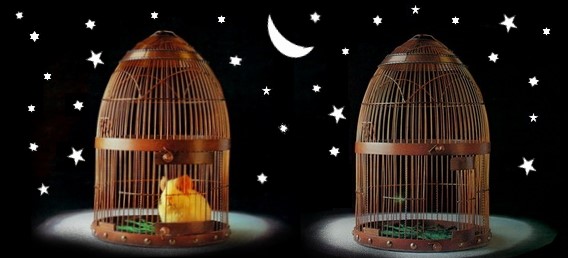
"Si todo hiciera Crack" se concibió como una algoría basada en un personaje real. Algunos años de empezar con Crack mi hermano, dos años más joven, compró en una tienda de animales cerca de donde vivíamos un hamster muy bonito. Como es frecuente, el interés inicial por el animalito fue poco a poco desapareciendo a medida que su atención pasó a intereses digamos "más maduros"
Le habíamos puesto de nombre "Follardo", un nombre que nos pareció muy apropiado y gracioso teniendo en cuenta los encuentros sexuales intensivos, aunque breves, de los que suelen gozar para su placer y nuestra curiosidad en cuanto pueden estos animalitos.
Follardo desgraciadamente nunca tuvo esa oportunidad. La posiblidad de ello para animales en cautividad como el nuestro era prácticamente inexistente. Y los que es peor, no sólo el sexo le sería para siempre una experiencia desconocida sino que todas las demás experiencias de las que goza cualquier animal en libertad le serían a nuestro Follardo vetadas
Cuando mi hermano se fue de la casa olvidó con su partida a Follardo. Y a partir de entonces era mi madre la que una vez al día abría su jaula para que él pudiese corretear de un lado para otro durante media hora en el cuarto de baño y así poder estirar las piernas un poquito.
Recuerdo que su destino siempre me resultaba triste, viéndole correr sin esperanza alguna por el baño, sin perspectivas de futuro o de cambio. Y a partir de ahí mis pensamientos se derivaban siempre hacia la triste situación de la vida de los demás animales domésticos, antes salvajes, como Follardo. Todos a los que con mayor o menor grado de afecto llamamos "mascotas".
Y no es necesaria una gran imaginación para transladar esa compasión a muchos de nuestros congéneres, seres humanos en el presente, pasado o tuturo, cuyas perspectivas de llevar una vida decente, de disfrutar, de descubrir, de amar, de conocer... siempre serán muy limitadas..
El dinero, (la carencia de este) la salud, la educación e incluso la religión pueden sert muchas veces la jaula invisible en la que algunos vivimos.
Pues, de eso trata "Si todo hiciera Crack". Dos historias que van en paralelo:
La primera, la historia de nuestro pequeño hamster, un personaje real corriendo en círculos y alejado de lo que debería ser su auténtica vida. Y de las conversaciones imaginarias que yo mantenía con él, y aquí entramos en la fantasía, donde empieza la alegoría, presentado las preguntas cruciales que cualquiera pudiera cuestionarse... e intentar responder.
Las preguntas pueden ser muy diversas. Por ejemplo podríamos oponer por ejemplo la auténtica libertad con nuestro concepto de "seguridad", el dinero y/con el tiempo libre, la salud con/y el trabajo excesivo, etc. Estoy seguro de cualquiera podría pensar en estas y otras categorías que en muchos casos resultan incompatibles.
Por último, una pequeña anécdota en relación a la letra: En nuestra primera versión, la que se tocaba en nuestros conciertos cantábamos "Hostia, si todo hiciera Crack". Pero al llegar al estudio de grabación nos convenciéramos de que elíminasemos esa "hostia", "mal sonante" y que podrá molestar a algunos y de sustituirla por algo más ligero y más políticamente correct.
Así que al final la contundente y expresiva "hostia" pasó a ser sustituida por la ñoña "hey, hey ,si todo hiciera Crack", ¡qué se le va a hacer!. Como después de 40 años no nos sentimos ya compromentidos con aquella imposición, esta versión que ahora presentamos vuelve al "hostia", que había sido nuestro original y con el que siempre nos hemos sentido mucho más identificados.
Buenos deseos
Cuando nadie ya contaba con cambiar
volvió a brillar en los ojos
el sol de esperanzas perdidas,
rotas por el temporal,
que ojalá se haya ido.
No quisiera verme más
rodeado de horizontes de tonos grises
que no podría soportar.
No podría soportar.
No veis que en mis pies nacieron alas
y no pueden más que agitarse y volar
por mil cielos azules y acercarse mucho al sol,
rozar a las estrellas,
vivir cuanto hay por vivir
Y siempre a cada paso
mucho más allá subir,
mucho más allá subir.
Lovers of the Unreal
I heard the wind promise
the thistles a garden,
an Eden where they’d trade
their thorns for love.
And if the wind says so, why should we doubt his word?
He knows all there is to know.
Carry me there in your arms;
I know you will find the way.
But if it is I who should arrive first,
I’ll spend forever waiting for you.
You and I will never change,
for we are both blind lovers of the unreal.
And there is no reason to change at all,
except, perhaps, enough to survive.
You’ve spent your whole life riding the clouds,
while I’ve spent mine weaving foolish dreams.
You and I...
Coward or deserter
Swallow your feelings, my friend,
you knew this day was going to come.
but just because it was expected doesn't make it less sad,
only more absurd.
The flight on this plane feels so long
trying not to think about what’s to come,
my life has changed in just two minutes
and everything is left behind, everything stays behind.
(The parents speak)
"Drop those ideas you have now about escaping,
everyone has gone through what you're about to go through,
if there’s no trouble, you'll come home every Saturday."
"You’ll come back more serious, a real man,
all your follies will end in a year.
Then you'll get a job, and you can build a home
just like this one."
I, who never understood anything about wars,
And live happy in my own cloud. without fighting,
I find that, at last, my time for duty has arrived.
But what duty?
If there is no duty,
if I owe nothing to anyone but myself,
and all I know is that I’m alive
and that life is nothing without freedom.
Coward or deserter,
whatever name they give me, I won't care,
what does it matter!
I’ll be so alone. Why?
[PARENTS]
"You asked for it, pay the price, you’re such a wise-ass"
What will happen now? I don't know.
[PARENTS]
"If you hadn't done it, you’d have nothing to fear.
It serves you right, it serves you right, serves you right"
Notes on "Cobarde o desertor" ("Coward or deserter")
The story takes place in Spain during the first days of November 1975. At that time, military service —known as "la mili"— was mandatory for every young man in the country.
The dictatorship of a dying Franco, who had ruled with an iron fist for forty years, was facing a severe political crisis: the Moroccan authorities—specifically King
Hassan II, another dictator—had launched an orchestrated campaign known as the
"Green March." Its goal was to "peacefully," yet forcibly, occupy the Spanish Sahara, a territory that had been under Spanish administration for over a century.
For many young men, the shadow of a military campaign in Morocco loomed large.
We first "hear" the doubts and fears of a young man fleeing his country on a flight toward an uncertain future. We "hear" his thoughts and his absolute rejection of taking up arms in any situation.
His thoughts then transport us to his final conversation with his parents: "don't go," "don't do anything crazy," "do as the others do: keep quiet and comply."
"You’ll come back more serious, a real man..." "Then you'll find a job and start a home just like this one."
"Coward or Deserter" constitutes —or at least that was our intention— a full-fledged manifesto against war, weapons, and compulsory military service.
One more story about el Cid coming up
With the scorching sun on the backs of my hundred men,
I'm on the way to exile, for a year away
I am leaving Castille, always faithful to my Sir,
Always a loyal servant of my king Don Sancho.
I will fight, I will live, I will win, I'll be back.
A thousand, ten thousand, a hundred thousand...
(there's fire on his eyes)
deaths I have witnessed.
(He is a hero..., or just a fool)
I am no longer young.
(Tremble, you Moors!)
(The battle will be hard)
Fight has always been the only reason in my life.
There's no way back for me now...
(They are twice, thrice as many as us)
Only a stray spear on my chest could stop me now.
But I fear I won't be able to hold enough.
(Tremble, You Moors!)
I feel my end is near,
there's not much time left for me now.
But I am ready.
I am ready!
Notes on "One more story from El Cid coming up"
First a brief introduction on the context: The storyline of Marchando... is based on the exile and last days of El Cid "Rodrigo Díaz de Vivar", a Spanish hero and the protagonist of the "Cantar de mio Cid", (El Cid, was the name given to him by the Moors) the most important medieval Spanish epic poem.
The poem recounts the life and deeds of the Cid, an exiled noble trying to recover the favor of his king, Don Sancho, during the Reconquista by fighting and trying to expel the Moors, the Muslim invaders, from the Iberian Peninsula.
Apart from the mythical historical personage, there is also well-documented proof of the real life and deeds of Rodrigo Diaz de Vivar, who lived is the country from 1043-1099. El Cid remains today in the Spanish popular culture arguably the most important hero and national icon.
Now, back the song by Crack, in the first lines we "hear/read" the thoughts of El Cid, resentful by the decision of his beloved king who sends him into exile. Resentful, but ready to recover his favor by doing what he is best at: "I will fight, I will live, I will win, I'll be back"
Then, we witness the actual fight, the account of the battle, given alternatively by his soldiers (in italics): "There's fire on his eyes", "He is a hero,... or just a fool" and by the hero himself: "I am no longer young", "Tremble you moors", etc.
Finally, on the last verses we hear the acceptance by the hero that his end is near: "there's not much time left for me now... but I am ready"
The band decided to approach the story of El Cid from two different and maybe complementary perspectives of this legend:
On the one hand there is the official account of an impeccable legendary hero, both in the poem and in the traditional folk Spanish culture, that of an ideal medieval knight who is valiant, loyal and full of virtues.
But also another possible interpretation where El Cid can be seen as a simple man, deceived by his king, with an obsessive idea to kill as many of his enemies as he can and who maybe is not, as we might think, exactly a hero, but someone who in the way has lost his wits ("he's a hero, or just a fool").
It is on the basis of this two-fold possible consideration of the legend that when the moment arrived we all agreed that the title for this piece should relect some way the ambivalence of the character.
So, after each one made his suggestions we finally chose "Marchando una del Cid" as the title.
When you order a dish or a tapa in a bar or restaurant in Castillian Spanish you frequently hear the waiter passing the order to those working in the kitchen using the colloquial expression "marchando.." whatever you have order.
So, for example if you ordered a serving of "patatas bravas" you would the waiter calling the kitchen loudly: "marchando una de patatas bravas".
A story so popular as "the legend of El Cid" has been throughout the years opened to a lot of interpretations. Well, this is ours, just a little bit more prosaic than most others :-)
If everything cracked apart
Sleep my old friend, quiet in your corner
let the sunlight not disturb you.
If at least a sun was there
that you could hide from when you wake up
(Follardo)
But it has always been like this,
I don't know anything else
but this cage of mine made of glass
that is my jail and my house.
If I had a reason to live
if only my sad existence
could make someone else smile
Do you feel sorry for me?
I feel such pity for me!
I will bite my tail, like always, once again, just one more time.
But the worst of this is sadly
that I will never find an end.
Do you feel sorry for me?
I feel such pity for me!
Don't worry: I will set you free. You'll go away.
I just can't see you like this
A thousand of forests out there are all just waiting for you,
a thousand of starry nights too are out there for you to see.
You'll see how big this world is... You won't believe what you see.
And you won't find there no cages in which you would have to live.
Say, what would you rather choose?
a single day, but live free
or to live forever here
in this woeful cage of yours.
At the end you'll ask yourself
what should be your fight against
If you stay here, you won't live
the life you'd love to have
Fuck it!.. If all just cracked apart
If only there was something we could change,
If there was something we could change...
Notes on "If everything cracked apart"
Si todo hiciera Crack is basically an allegory based on a real character. A few years before I started to play with Crack, my younger brother had bought a beautiful hamster in a small local animal shop near our apartment. As in some many cases, the initial interest in the little animal progressively vanished at the same time as other more "mature" interests attracted his attention"
We gave him the name "Follardo", an invented name which clearly suggests the brief but intensive sex sessions which these little animals, when possible, so much enjoy.
For a captive house animal like ours the prospect of this little pleasure was however non-existent. And even more sadly, not only sex would forever be unknown to him (he had been born only a few days before he was brought home) but also all the other experiences of wild animals would be taken away from him
When my brother left my parent's he also forgot his Follardo. Then it was my mother who once a day would open his cage and let him run around the toilet for half an hour so that he could at least strech his legs a little.
I always felt sad about his fate. Seeing him running around the toilet with no hope, with no prospects for the future I could easily translate his sad situation into the life of many other domestic wild animals, like him. Those who we affectionately call them "pets".
But you don't have to be too imaginative to translate this pity to many of our past, present and future human being fellows whose prospects of leading a decent life, enjoying, discovering, loving, knowing, or maybe just running or moving ... will always be meager.
Money, health, education and even religion sometimes can be the invisible cage some of us live in.
Well, this is what is all about in "Si todo hiciera Crack". Two stories running in parallel:
First, there is, of course, the story of our little hamster, a real non-invented character, running around in circles away from a of a real life. And then my imagined conversations with Follardo and here's where the fantasy, the allegory starts', putting down all the crucial questions anyone should try to face... and answer.
These questions could be very diverse, confronting for example real freedom and "security", money and/or free time, health and/or hard-work, etc. I am sure anyone can think about these and many other concepts which in many cases can prove to be incompatible.
There's a little anecdote concerning this lyrics: Originally the last verses of the tune used to go (in Spanish) "Hostia, si todo hiciera Crack" (Dam it, if all just cracked apart). However, once we arrived at the studio we were convinced that we should change the word "hostia", considered a swearword and maybe offensive to others by something lighter and more politically correct.
So, finally the strong but also very expressive "hostia" become the silly and too light "hey, hey ,si todo hiciera Crack". As after 40 years, we no longer feel at all bound by that compromise, this version now reads "hostia", our original choice with with which we have always felt much more identified.
Good wishes
When no-one thought anything could change,
suddenly the sun came back to shine in our eyes
and melt away our frustrated hopes
shattered by the storm.
And I hope the storm now is over,
for I can't picture myself again
surrounded by dark horizons
that I know I would not bear
that I know I could not bear.
Can't you see my feet have grown new wings
which now can't wait to flap fast and fly?
Through a thousand blue skies and very close to the sun
and then feather-touch the stars,
and live all there is to live
And with every step I take
always further up ascend
always going up beyond.